

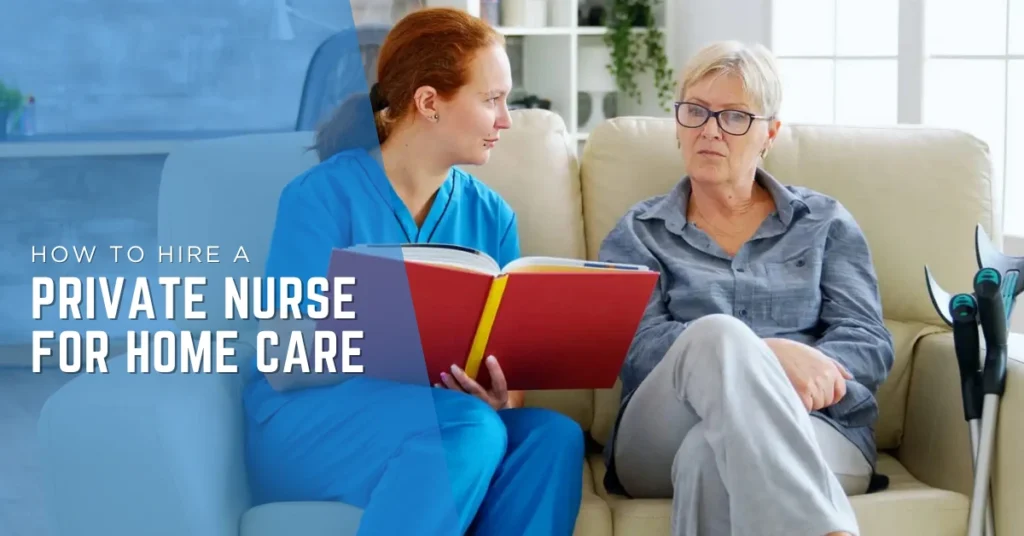
If a loved one requires regular medical care, recovering at home is often more secure and comfortable than a stay in a facility or hospital. But, delivering medical attention within the home environment can prove a challenge to family members, particularly when the patient requires assistance from a professional nurse. This is the reason hiring the services of a private nurse to provide home health care could make a significant difference.
A private nurse will offer individualized medical assistance within the comfort of the home, while also helping families with the complex needs of their loved ones. Based on the patient’s health and care plan, it is possible to provide nursing care, medication management, vital sign monitoring, wound treatment, mobility assistance, disease management, post-hospital care, and many other nursing-related services.
Alongside skilled nursing support, some individuals may also need Personal Care Services to assist with everyday activities. Personal care may include help with bathing, grooming, dressing, toileting, mobility, and other daily routines, allowing individuals to maintain comfort, dignity, and independence while receiving care in their own homes.
However, how do you identify the perfect nurse? What credentials should you search for? How much does private nursing cost? Should you employ an independent nurse, or partner with an experienced home health care agency?
This guide will explain how to find a private nurse for home care, what to consider before deciding to hire a nurse, the best questions to ask, and how skilled home care providers can assist families in finding reliable nursing care.
What Is a Private Nurse for Home Care?
Private nurses are licensed professional in nursing who offers specific care to patients who is not in a hospital or traditional health facility. Depending on the requirements of the patient the private nurse could be in the home of the patient for scheduled appointments, longer shifts or even around-the-clock support arrangements.
Private nursing is usually intended for those who require more medical care than a standard medical caregiver could offer.
A private nurse could have the designation of RN (Registered Nurse) or LPN/LVN (Licensed Practical Nurse/Licensed Vocational Nursing) according to the state’s requirements and the needs of the patient.
Services could include:
- Monitoring and administration of medications
- Monitoring of vital signs
- Skin care and wound healing
- Post-surgical assistance
- Management of chronic diseases
- Transfer assistance and mobility
- Catheter or other medical device assistance when it is within the area of responsibility
- Assessments by patients
- Monitoring of health status
- Collaboration with other healthcare professionals
- Education of the family and patient
- Assistance with recovering following hospitalization
The specific services offered must always be determined by the needs of the patient’s medical condition as well as physician orders when necessary, the nurse’s certification and the area of their practice as well as any applicable regulations of the state.
Who May Need a Private Nurse at Home?
Not everyone who receives home care will require private nursing. Some people may require assistance with their daily tasks such as companionship, housekeeping or even personal health care.
A private nurse could be a good option when a patient needs medical assistance that is beyond the scope of normal nursing.
Common scenarios can include:
1. Seniors With Complex Medical Needs
Seniors may have several health issues simultaneously. A private nurse can keep track of health issues, administer prescribed medications, and help implement the development of a personalized treatment plan.
2. Patients Recovering After Surgery
After surgery, returning home can be more relaxing, however recovering may require monitoring by an expert. Private nurses can offer the appropriate post-operative care and detect any issues that may need to be communicated to the healthcare professional.
3. Individuals With Chronic Conditions
Patients suffering from conditions like heart disease, diabetes respiratory disorders, diabetes or other chronic diseases might require the assistance of a professional nurse in their health care plan.
4. Patients With Disabilities or Long-Term Care Needs
Certain people require ongoing nursing care due to neurological disorders, physical disabilities or other chronic medical issues.
5. Patients Recently Discharged From a Hospital
Transitioning from the hospital into home is a challenge. Private nursing care can assist families adhere to discharge guidelines and track the progress of the patient’s recovery.
6. Individuals Requiring Extended Nursing Support
Certain patients may require nursing care for a few hours daily, over night support, or more extended schedules. The level of care needed will depend on the needs of the patient and the care plan.
How to Hire a Private Nurse for Home Care
Finding a private nurse be more than just looking online and selecting the first nurse available. You’ll want someone with the appropriate credentials and experience, as well as ability to communicate, reliability and knowledge of your loved ones particular needs.
This is a step-bystep procedure.
Step 1: Determine What Type of Care Your Loved One Needs
Before you begin searching for a private nurse prepare a list of your patients’ current needs for care.
Consider:
- What health problem does the patient suffer from?
- Do they require assistance with administration or medication?
- Does wound care need to be taken care of?
- Do patients require the monitoring of vital signs?
- Is the patient afflicted with mobility issues?
- Is the patient recuperating from surgery?
- Do you think the patient requires an extended or overnight nursing program?
- Are there medical devices involved?
- Does the patient require help with a chronic condition?
- How often does the patient require skilled nursing assistance?
Knowing these requirements will help you determine the best type of nursing professional.
If you’re not sure what degree of care is best for you consult your physician or certified home health care professional to obtain advice.
Step 2: Understand the Difference Between Private Nursing and Home Caregiving
The most crucial actions is to understand the distinction between medically trained nursing and home care.
A home health aide or caregiver assistant can help with activities like:
- Bathing
- Dressing
- Grooming
- Preparation for meals
- Light housekeeping
- Companionship
- Support with everyday routines
- Support for mobility
A registered nurse however is able to offer qualified nursing care within the area of practice, for example:
- Administration of medication
- Health evaluations
- Monitoring of vital signs
- Wound treatment
- Assistance with disease management
- Monitoring of post-hospital patients
- Certain procedures and treatments are prescribed by a doctor or a nurse
A few families require both kinds of assistance. An experienced home health agency will be able to determine if the patient requires personal or private care, nursing or companion care, or a mix of all three.
Step 3: Decide Whether to Hire an Individual Nurse or a Home Health Care Agency
Families typically have two options: employing an individual nurse on their own or employing an agency for home health care.
Hiring an Individual Nurse
The hiring of a single nurse could give you a more personal relationship, and possibly more flexibility. But, families might be responsible for locating an alternative if the nurse is not available.
Other aspects to consider are:
- Verification of credentials
- Scheduling
- Payroll obligations
- Backup protection
- Employment necessities
- The importance of insurance
- Care documentation
- Resolving unexpected absences
Hiring Through a Home Health Care Agency
A home health care provider can handle many administrative aspects of care as well as connect families to professionals who are qualified.
Based upon the organization, the services can be:
- Nurse-to-Nurse matching
- Scheduling
- Care coordination
- Staffing for backup
- Monitoring continues
- Care-plan communication
- Support for administrative tasks
If you have a family that wants an approach that is more organized by working with a reliable home care provider can offer the added layer of structure and help.
Step 4: Verify the Nurse's Credentials
Credentials are among the most crucial factors when selecting a private nurse to provide home health care.
Find out if the nurse holds an active license that is appropriate to the job and the location. It is also important to verify the the relevant experience and qualifications.
Based on the circumstances depending on the situation, you may wish to inquire regarding:
- RN as well as LPN/LVN licensing
- Relevant nursing certifications
- Experience from clinical research
- The patient’s experience with the medical
- Education for the future
- References
- Background screening
- CPR certification when appropriate
- Experiences with home-based care
If you’re working in an agency inquire how they screen its licensees, screens, and assesses its nurses.
Step 5: Look for Experience With the Patient's Specific Needs
The general experience of nurses is useful, but a specific experience is even more valuable.
If, for instance, your loved ones has a difficult wound, ask if the nurse is familiar with wound treatment.
If the patient suffers from diabetes, ask about their experience aiding patients who have diabetes related care plans.
For conditions like dementia, neurological or respiratory problems and post-operative recovery or any other needs that are specialized find professionals who are experienced with the issues related to those conditions.
The objective is to find a nurse who’s expertise is in line with the patient’s expectations for treatment.
Step 6: Ask About Availability and Scheduling
Before you hire an individual nurse, you should discuss the anticipated schedule.
Ask:
- What days are nurses on call?
- How many hours of service can they be able to
- Do they have the ability to provide care for overnight?
- Can they work on weekends?
- What happens when they become sick?
- Is backup coverage available?
- How much notice is required to make changes to the schedule?
It is important to discuss the scheduling prior to when care is initiated.
If you have a loved one who requires 24/7 skilled nursing inquire with the care provider what the system for continuous care is. In many instances, several nurses are required to ensure safe and reliable care instead of relying on a single person.
Step 7: Discuss the Care Plan
A great private nursing arrangement must be based on an accurate understanding of the needs of the patient.
The care plan might include:
- Medical requirements
- Nursing jobs
- Medical requirements
- Requirements for monitoring
- Mobility requirements
- Security issues
- Communication methods
- Instructions for the physician
- Family obligations
- Emergency procedures
The family and the nurse should be aware of the expectations.
A professional organization can assist in coordinating communication between the family, patient nurses, patients and other members of the healthcare team.
Step 8: Ask About Communication
Communication is crucial for healthcare at home.
Before you hire a nurse establish how you will communicate updates.
Ask:
- The nurse must speak to in the event that the patient’s condition changes?
- How do care updates are documented?
- Do family members get regular updates?
- The nurse’s job is to interact with the doctor or healthcare team?
- Who can be reached during off hours?
Communication that is clear helps families stay updated without having to oversee every aspect of the patient’s treatment.
Step 9: Understand the Cost of Private Nursing
The price of a private nursing home varies greatly based on various variables.
This could include:
- Location
- The type of nurse professional
- The degree of medical complexity
- The number of hours
- Overnight or weekend requirements
- Specialized care needs
- If services are offered through an agency
- The length of the care agreement
Since prices vary in each case, it is best to get a customized evaluation and quote, rather than using an online general estimate.
When you are comparing providers, don’t look only at hourly charges. Be sure to consider the entire worth of the service including reliability of staffing and coordination of care professional credentials in scheduling, as well as backup protection.
Red Flags to Watch For When Hiring a Private Nurse
Families must also be aware of warning signs to look out for.
Be wary of a possible supplier:

- They cannot verify their nursing license
- Are unable or unable to supply professional reference
- Avoids questions about qualifications
- False medical claims made
- Costs are not clearly explained
- It is unclear about the scheduling
- I am unable to describe how emergency situations are handled
- Do not seem to be to be knowledgeable about the patient’s medical needs
- Communication is not as good.
- Family pressures to initiate services as soon as possible, without a proper evaluation
Safety of your loved ones always be the top priority.
Get Trusted Private Nursing Care at Home
Your loved one deserves compassionate, professional support in the comfort of home. Our experienced private nursing team provides personalized care based on each patient’s unique medical needs, schedule, and care plan. Contact us today to discuss your needs and schedule a personalized home care assessment.
Does Insurance Cover Private Nursing at Home?
The coverage of a patient is based on their insurance plan and eligibility, medical requirements and the kind of care at home being sought.
Certain services are covered in specific circumstances in the case of extended-hour or private duty nursing might require different coverage.
Before beginning services, you should ask:
- Are the services covered under my insurance?
- Do you need a doctor’s prescription?
- Is prior authorization required?
- Are there limitations on the number of hours?
- What percentage of the cost is the responsibility of the family?
- Does the provider belong to the network?
If you are thinking about private nursing, consult the insurance company and an agency for home health care to discuss the relevant policies along with payment choices.
Questions to Ask Before Hiring a Private Nurse
An interview will assist you in determining whether an agency or nurse is appropriate for your loved one. It can also help you understand whether the provider offers additional support options, such as Respite Care, which can give family caregivers temporary relief while ensuring their loved one continues to receive appropriate care.
You might want to ask:
- Are you licensed to provide nursing care in this specific state?
- What experience do you have with my loved one’s health condition?
- What types of nursing care are you able to provide?
- Have you previously worked in home care?
- What are your hours of availability?
- Do you offer extended or overnight services?
- How do you document the care you provide?
- How do you communicate changes in the patient’s condition?
- What happens if you are unable to come to work?
- Are professional references available?
- What background screenings have been completed?
- What are the costs and payment requirements?
- Do you require an assessment before services begin?
- How is the care plan created?
- Who should the family contact with concerns or questions?
Professional providers should be able to answer these questions clearly and explain how their services can support both the patient and family caregivers.
Signs You Have Found the Right Private Nurse
A good nurse must offer more than just clinical expertise. Families also require someone who is reliable, considerate and sociable. They should also be confident working in a family space.
Find qualities like:
Professionalism
The nurse should show up when scheduled, speak in a manner that is appropriate and be respectful of the privacy of the patient and their home.
Compassion
Patients who receive home care might be frightened. An approach that is compassionate can help patients feel valued and cared for.
Reliability
It is crucial to be consistent when a patient relies on nursing care that is consistent.
Communication Skills
The nurse must be able explain their care clearly to the family and patient and be able to communicate concerns in a timely manner.
Relevant Experience
Experience of similar patients or illnesses will help nurses understand the needs of the patient more effectively.
Respect for Independence
Home healthcare should be able to support the person’s independence as often as feasible.
Why Choose Professional Private Nursing Through a Home Care Agency?
The task of managing private nursing on your own can be stressful, especially in cases where a patient requires continuous treatment.
A reputable home health agency could be able to help by offering an organized method of health care delivery.
Depending on the service provider the family may be able to be able to benefit from:
- Professional matching of nurses
- Assessments of care
- Flexible scheduling
- Staffing for backup
- Care coordination
- In-continuing communication
- Personalized care plans
- Professional supervision
- Assistance for families
This could make the process simpler for families who don’t wish to oversee the entire process of private nursing on their own.
How Private Nursing Supports Aging at Home
Private nursing services can aid in older adults at home by providing an appropriate level of medical care to the patient’s environment.

Instead of asking someone in the family to take on complicated nursing duties an experienced professional may offer care in accordance with the established care program.
It can make families feel more secure and allow older adults to continue with their familiar routines and environments.
Nursing at home can also be used in conjunction with other services, such as personal care, companionship respite care, as well as rehabilitation assistance.
A Private Nursing Home vs Healthcare Home Nurses: Can There Be A difference?
The words “private nurse” and “home health nurse” can be used interchangeably, however they may refer to different arrangements for care.
Home health nurses could offer nursing care in skilled settings as part of a wider home health plan, usually with specific eligibility requirements, a physician’s order and insurance regulations.
Private-duty nursing is generally a reference to more intensive one-on-one nursing assistance, which can require longer shifts or ongoing support.
The right choice is contingent on the individual’s medical requirements as well as the treatment plan, insurance status and regulations of the state.
A trained home care professional will help families determine what kind of care might be suitable.
When Should You Hire a Private Nurse?
There isn’t one point that every family has to employ a private nurse.
But, it could be time to consider seeking the possibility of a professional nursing assistant in the following situations:
- The medical needs of a loved one are becoming more difficult to handle
- Family caregivers are overwhelmed
- The patient experiences frequent health problems.
- The management of medication is becoming more complex
- The patient recently returned to his home after a stay in the hospital
- Recovery requires professional supervision
- The patient requires skilled nursing methods
- Chronic conditions require ongoing monitoring
- The family is not able to offer the necessary level of care.
- The patient requires continuous or extended nursing assistance
Getting help from a professional early on can assist families to understand their options prior to when an issue becomes too overwhelming.
How to Start the Private Nursing Process
If you think your loved one could need private nursing services begin by scheduling an assessment of care.
In an assessment, a trained healthcare professional can find out what the individual patient’s needs are
- Current health status
- Medical background
- Daily routine
- Functional capabilities
- Nursing needs
- The need for medication
- Security is a major concern
- Preferred schedule
- Family involvement
In light of the evaluation as well as applicable clinical requirements, the caregiver will be able to determine the type and amount of home-based health care is needed.
Get Personalized Private Nursing Support at Home
The right private nurse to provide home care isn’t required to be difficult. A qualified professional will provide expert medical assistance as well as help your loved one stay comfortable in their familiar home setting.
If your family members require support post-hospital, chronic disease treatment, assistance with medication vital monitoring of signs and wound treatment, or even extended nursing care customized treatment can make everyday life simpler for family caregivers and patients.
At Elbok Home Health Care Company, We provide families with caring and skilled caregivers in the home according to individual requirements. Our aim is to provide home-based health care reliable, personal and centered on the patient’s safety, comfort and autonomy.
Frequently Asked Questions About Private Duty Nursing
1. How can I find a private nurse for at-home care?
Begin by identifying the health and scheduling requirements and then search for a licensed and qualified licensed nurse or an accredited home health care provider. Examine credentials, relevant experiences available, references, the services offered and costs prior to starting treatment.
2. What is a private nursing assistant do in a home?
Private nurses can provide skilled services like administration of medications and monitoring vital signs as well as health assessments, wound care and chronic disease support post-hospital treatment, and other nursing services that are within their scope of practice and the treatment plan of the patient.
3. What does an individual nurse's fee?
Private nursing costs differ according to the location, nursing qualifications as well as the number of hours required and patient requirements, schedule, and the type of care that is required. Request an assessment that is individualized and quote to know the anticipated price.
4. Private nurses can provide care 24/7?
If the service provider and the patient’s requirements extended or 24-hour nursing assistance is possible. Continuous care usually requires the right arrangement of staff to ensure safety security.
5. Do I require an order from a doctor to employ private nurses?
The requirements differ based on the kind of nursing care, the payer state regulations, as well as the clinical situation. Check with the healthcare provider and agency if an assessment or a physician’s prescription is required.
6. How can you tell the difference between an individual nursing assistant and caregiver?
An individual nurse (or private) is registered nursing professional that can provide expert medical services in their area of practice. A caregiver usually offers non-medical support like personal care assistance with meal preparation, companionship and assistance with daily living.
7. What can I do to determine whether my parent requires an in-home nurse?
Your parent could be able to benefit from private care in the event that they have complex medical requirements or require nursing care that is skilled or are recovering from surgery or hospitalization or require ongoing health monitoring or more medical assistance than the family caregiver could effectively offer.
8. Can a home health service assist me in finding an individual nurse?
Yes. Dependent on the agency and the services they provide the home health professional can determine requirements for care, aid in matching an experienced professional to coordinate scheduling, and offer ongoing support.
9. Can private nursing help seniors remain at home?
Private nursing provides professional medical care in a familiar home setting. Dependent on the patient’s health and the care plan for them it can help ensure the patient’s safety and comfort at home.
10. How can I begin in private nursing?
It is the first thing to do: call a trusted home health provider and talk about your loved one’s requirements. An assessment of care will help you determine the best kind of care, frequency, and amount of care.