

When a wound does not heal properly, it can affect a person’s comfort, mobility, independence, and overall quality of life. While minor cuts and injuries may heal with basic care, some wounds require specialized assessment, ongoing treatment, and professional monitoring. This is where wound care facilities can play an important role.
Wound care facilities, also called wound care centers or wound clinics, are specialized medical settings where healthcare professionals evaluate and treat wounds that are difficult to heal. These facilities may care for patients with diabetic foot ulcers, pressure sores, surgical wounds, venous ulcers, arterial wounds, and other chronic or complex wounds.
For individuals who need continued wound treatment after visiting a wound care facility, Home Health Care Services, can also provide valuable support. Skilled professionals may help eligible patients follow their prescribed wound care plans, monitor changes, provide education, and coordinate care with physicians and other healthcare providers.
According to MedlinePlus, a wound care center is a medical facility designed to treat wounds that do not heal properly. Common examples include pressure sores, surgical wounds, diabetic foot ulcers, and wounds associated with poor circulation or other health conditions.
If you or a loved one needs wound-related support at home, Elbok Home Health Care can help families understand available home care options and connect patients with appropriate care based on their individual needs.
What Is a Wound Care Facility?
A wound care facility is a specialized healthcare setting that focuses on evaluating, treating, and monitoring wounds that may be slow to heal or require more advanced treatment.
Unlike basic wound treatment, specialized wound care often involves identifying why a wound is not healing and developing an individualized treatment plan. A wound care team may examine the wound, measure its size and depth, assess surrounding skin, evaluate circulation, and determine whether additional treatment is needed.
The goal is not simply to cover the wound with a dressing. Proper wound management may involve treating underlying factors, protecting the wound from additional damage, controlling infection when present, supporting healthy tissue, and helping prevent the wound from returning.
MedlinePlus notes that wound care teams may include healthcare providers, nurses, physical therapists, and other professionals who work together to address wound healing and mobility needs.
Depending on the patient’s condition, wound care may take place in:
- A specialized wound care center
- A hospital outpatient department
- A physician’s office
- A skilled nursing facility
- A rehabilitation setting
- The patient’s home through appropriate home health services
The appropriate setting depends on the patient’s medical condition, treatment plan, mobility, insurance coverage, and healthcare provider’s recommendations.
What Types of Wounds Do Wound Care Facilities Treat?
Wound care facilities can treat many different types of wounds. Some wounds result from surgery or injury, while others develop because of chronic health conditions, pressure, circulation problems, or limited mobility.
1. Diabetic Foot Ulcers
Diabetes can contribute to nerve damage and circulation problems, which may make foot wounds more difficult to notice and heal.
A small blister, cut, or sore can become a significant problem if it is not identified and treated appropriately. Wound care professionals can assess the wound and help develop a treatment plan.
2. Pressure Sores
Pressure sores, also called pressure injuries or bedsores, can develop when prolonged pressure affects areas of the body such as the hips, heels, tailbone, or elbows.
People with limited mobility may be particularly vulnerable because they may have difficulty changing positions regularly.
Wound care may include pressure relief, appropriate positioning, dressing changes, skin protection, nutrition support, and treatment prescribed by the healthcare provider.
3. Surgical Wounds
Some surgical wounds heal normally, while others may experience complications or delayed healing.
A wound care team can monitor the surgical site, provide prescribed wound treatment, identify concerning changes, and communicate with the patient’s healthcare provider when necessary.
4. Venous Ulcers
Venous ulcers are commonly associated with problems involving blood flow through the veins. They often occur on the lower legs and can become chronic without appropriate medical management.
Treatment depends on the individual’s condition and may include wound care, compression therapy when clinically appropriate, mobility support, and management of the underlying circulation problem.
5. Arterial Wounds
Arterial wounds may occur when blood flow through the arteries is inadequate. Because adequate blood flow is important for tissue health and healing, these wounds may require specialized medical evaluation.
6. Chronic or Non-Healing Wounds
A wound that continues to remain open or does not show expected healing may require specialized assessment.
MedlinePlus identifies wounds that have not started to heal after approximately two weeks or have not completely healed after six weeks as examples of non-healing wounds that may require wound-center care.
Why Do Some Wounds Take Longer to Heal?
Healing is affected by many factors. A wound may become chronic when the body has difficulty repairing damaged tissue or when the underlying cause is not adequately addressed.
Factors that can interfere with healing include:
- Diabetes
- Poor circulation
- Nerve damage
- Infection
- Limited mobility
- Pressure on the affected area
- Poor nutrition
- Certain chronic illnesses
- Smoking
- A weakened immune system
- Bone infection
- Repeated trauma to the wound
MedlinePlus lists diabetes, poor circulation, nerve damage, immobility, poor nutrition, weakened immune function, and smoking among factors that can contribute to delayed wound healing.
This is why effective wound management often requires more than dressing changes. Healthcare professionals may need to determine what is preventing the wound from healing and address those factors as part of the overall treatment plan.
Who May Benefit From Wound Care Services?
Families should not assume that every wound requires specialized wound-center treatment. A healthcare provider can determine the appropriate level of care based on the wound and the patient’s overall condition.
Wound care services may be appropriate for individuals experiencing wounds associated with:
- Diabetes
- Surgery
- Pressure injuries
- Limited mobility
- Chronic health conditions
- Circulation problems
- Injuries
- Long-term illness
- Aging-related mobility challenges
If a wound is not healing as expected, contacting a healthcare professional can help determine whether specialized wound evaluation is necessary.
How Can Wound Care Facilities Help Patients?
Wound care facilities provide specialized evaluation and treatment that can help patients manage difficult or chronic wounds.
Here are several important ways they may help.
1. Comprehensive Wound Assessment
The first step is understanding the wound.
Healthcare professionals may examine the wound’s:
- Location
- Size
- Depth
- Appearance
- Drainage
- Surrounding skin
- Signs of infection
- Healing progress
They may also assess circulation and other factors that could influence healing.
A thorough assessment allows the healthcare team to establish an appropriate treatment approach.
2. Personalized Wound Treatment Plans
Every wound is different.
A treatment plan may be developed according to the type of wound, its severity, the patient’s overall health, mobility, medications, nutrition, and other factors.
The plan may include dressing changes, pressure relief, wound cleansing, debridement, infection management, compression when appropriate, or other treatments prescribed by the healthcare provider.
3. Wound Cleaning and Dressing
Proper wound cleaning and dressing are important parts of wound management.
Healthcare professionals can determine which wound products and dressing techniques are appropriate for the patient’s specific condition.
Keeping the wound protected can help reduce exposure to contamination and support the healing environment recommended by the patient’s care team.
4. Debridement
Some wounds contain dead or damaged tissue that can interfere with healing.
Debridement is a procedure used by healthcare professionals to remove dead tissue from a wound. MedlinePlus explains that several approaches may be used depending on the wound and clinical situation, including surgical and other forms of debridement.
Debridement should only be performed by appropriately trained healthcare professionals according to the patient’s clinical needs.
5. Infection Monitoring
Wound care professionals monitor wounds for potential complications.
Patients and caregivers should contact a healthcare provider when they notice concerning symptoms such as increased redness, swelling, pus, worsening pain, bleeding, fever, or chills.
Early communication with the healthcare team can be important when a wound appears to be getting worse rather than improving.
6. Support for Mobility
A wound can affect a person’s ability to walk, stand, transfer, or perform everyday activities.
Physical therapists and other healthcare professionals may become part of the wound care team when mobility is affected. MedlinePlus notes that physical therapists may assist with wound care and help patients remain mobile.
Maintaining safe mobility can be particularly important for older adults and individuals recovering from surgery or living with chronic health conditions.
7. Patient and Family Education
Education is another important component of wound management.
Patients and caregivers may need to understand:
- How to follow the prescribed wound care plan
- How to protect the wound
- When dressings should be changed
- How to recognize concerning changes
- How to reduce pressure on vulnerable areas
- Why follow-up appointments matter
- How nutrition and hydration may relate to overall health
- When to contact a healthcare professional
Caregiver education can make it easier for families to support a patient’s treatment plan safely at home.
Wound Care Facility vs Home Health Wound Care
One common question families ask is whether they need to visit a wound care facility or whether wound care can be provided at home.
The answer depends on the patient’s medical needs.
A wound care facility is generally appropriate when a patient requires specialized evaluation, procedures, advanced treatment, or close medical assessment that cannot be appropriately provided at home.
Home health care, on the other hand, may be appropriate for eligible patients who need skilled care at home as part of an ordered treatment plan.
Medicare states that covered home health services can include medically necessary part-time or intermittent skilled nursing care, including wound care for certain pressure sores or surgical wounds, when eligibility requirements are met.
This means the two types of care do not necessarily have to compete with one another.
A patient may visit a wound care center for specialized treatment and then receive appropriate follow-up care at home.
Take the Next Step Toward Better Wound Care Support
Contact Elbok Home Health Care today to learn about our home health services and find out how we may support your loved one’s care at home.
How Can Home Health Care Support Wound Recovery?
After a patient leaves a hospital, wound center, or other healthcare setting, continuing the prescribed plan at home can be an important part of recovery.
Home health wound care can provide professional support without requiring the patient to travel for every routine care need, when the patient qualifies and the service is ordered appropriately.
Depending on the patient’s care plan, home health services may involve:
- Skilled nursing visits
- Wound assessment
- Prescribed dressing changes
- Patient and caregiver education
- Monitoring for changes
- Communication with the healthcare provider
- Support with following the treatment plan
- Coordination with other healthcare professionals
Medicare specifically identifies wound care as an example of skilled nursing care that may be covered under eligible home health services.
For older adults or people with mobility limitations, receiving appropriate care at home may also reduce the practical difficulty of traveling to appointments.
At Elbok Home Health Care, our goal is to help individuals and families understand their home care options and receive dependable support based on their individual needs and prescribed care plans.
When Should You Consider a Wound Care Facility?
A wound may require professional evaluation when:
- It is not healing as expected
- The wound is becoming larger or deeper
- There is increasing redness or swelling
- Drainage or pus develops
- Pain is getting worse
- The patient develops a fever or chills
- A surgical wound is not healing normally
- A diabetic patient develops a foot wound
- A pressure sore develops
- The patient has poor circulation
- The wound repeatedly opens
- The patient has difficulty managing wound care at home
These symptoms do not automatically mean that a wound care center is required, but they are reasons to contact the patient’s healthcare provider for guidance.
MedlinePlus specifically advises contacting a healthcare provider when symptoms such as redness, swelling, pus, bleeding, worsening pain, fever, or chills occur.
What Are In-Home Wound Care Services?
In-home wound care services provide professional wound treatment and monitoring in the comfort of a patient’s home.
These services can be helpful for individuals recovering from surgery, managing chronic wounds, dealing with pressure injuries, or living with conditions such as diabetes that may affect healing.
Depending on the patient’s needs and prescribed care plan, skilled home health professionals may assess wounds, provide appropriate dressing changes, monitor healing progress, educate patients and caregivers, and communicate concerns to the healthcare team.
In-home wound care can reduce the need for unnecessary travel while helping patients receive consistent support in a familiar environment.
Why Is Follow-Up Wound Care Important?
Wound treatment does not necessarily end after one appointment.
Chronic wounds may require ongoing monitoring because their condition can change over time. Regular follow-up allows healthcare professionals to evaluate whether the wound is improving and whether the treatment plan needs adjustment.
Consistent wound care can also help patients and caregivers understand what to do between appointments.
Follow-up may be particularly important for people with diabetes, limited mobility, circulation problems, or other factors that may affect healing.
How Can Family Caregivers Help With Wound Care?
Family caregivers can play an important supporting role, but they should follow the patient’s healthcare team’s instructions and avoid performing medical procedures they are not trained or authorized to perform.
Caregivers may help by:
- Keeping scheduled appointments
- Helping the patient follow prescribed instructions
- Supporting safe mobility
- Helping reduce pressure on vulnerable areas
- Observing changes in the wound
- Keeping supplies organized
- Supporting appropriate nutrition and hydration
- Communicating concerns to the healthcare provider
- Encouraging medication adherence as prescribed
- Helping the patient maintain a clean and safe environment
Medicare also recognizes caregiver training as a covered service in certain circumstances, including education related to preventing bedsores and infections and caring for wounds.
When families understand the treatment plan, they can provide more consistent support while knowing when professional medical assistance is necessary.
Wound Care and Senior Home Health Care
Older adults may face additional challenges when dealing with wounds.
Reduced mobility can make repositioning difficult. Vision problems may make it harder to inspect wounds. Memory-related challenges can make it difficult to remember care instructions. Chronic conditions can also affect healing.
For seniors who qualify for home health services, professional care at home can provide valuable support while helping the individual remain in a familiar environment.
Home health services can also be coordinated with other appropriate services such as physical therapy, occupational therapy, and caregiver education when ordered and medically appropriate.
Medicare lists physical therapy, occupational therapy, speech-language pathology services, medical social services, and eligible home health aide services among covered home health services when applicable requirements are met.
What Happens During a Wound Care Appointment?
Many patients feel more comfortable when they understand what to expect.
A wound care appointment may begin with a review of the patient’s health history and current symptoms.
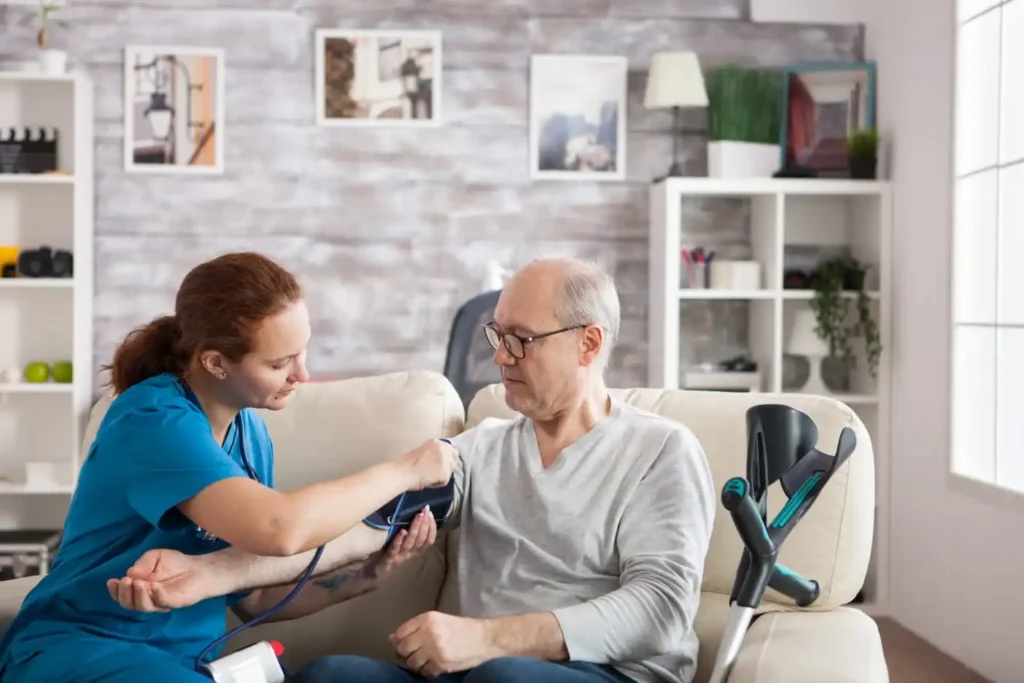
The healthcare professional may then examine and measure the wound, assess surrounding tissue, and evaluate possible factors affecting healing.
Depending on the situation, the care team may:
- Examine the wound.
- Measure the wound.
- Assess circulation.
- Look for signs of infection.
- Determine possible causes of delayed healing.
- Clean the wound.
- Apply an appropriate dressing.
- Perform debridement if clinically indicated.
- Recommend additional treatment.
- Provide instructions for care between appointments.
MedlinePlus notes that wound care centers commonly examine and measure wounds, evaluate blood flow, identify reasons for delayed healing, and develop treatment plans.
The frequency of visits varies depending on the wound and treatment plan.
How Elbok Home Health Care Can Help?
At Elbok Home Health Care, we understand that recovering from an injury, surgery, chronic wound, or serious health condition can be challenging for both patients and families.
Our home health care approach focuses on providing dependable support in the patient’s home according to the appropriate care plan.
For patients who require wound-related home health support, services may include skilled nursing care and monitoring when ordered and clinically appropriate.
Our team can also help families understand the difference between specialized wound care facilities and ongoing home-based care.
If your loved one has recently been discharged from a hospital or wound care center, or if managing care at home has become difficult, professional home health support may help make the process more manageable.
Frequently Asked Questions About Wound Care Facilities
Find answers to common questions about wound care facilities, including the types of wounds treated, specialized wound care services, home health wound care, treatment options, and how professional care can support patients throughout their recovery.
1. What is a wound care facility?
A wound care facility is a specialized medical setting that evaluates and treats wounds that are difficult to heal. These facilities may treat pressure sores, diabetic foot ulcers, surgical wounds, circulation-related wounds, and other chronic or complex wounds.
2. What does a wound care center do?
A wound care center may assess and measure a wound, evaluate circulation, identify reasons for delayed healing, clean and dress the wound, provide appropriate procedures, and develop an individualized treatment plan.
3. When should someone see a wound care specialist?
A person may need professional wound evaluation when a wound is not healing as expected, repeatedly opens, becomes more painful, develops increased redness or swelling, produces concerning drainage, or occurs alongside conditions such as diabetes or circulation problems.
4. Can wound care be provided at home?
Yes, certain patients may receive skilled wound care at home when it is medically necessary, appropriately ordered, and the patient meets applicable eligibility requirements. Medicare includes certain wound care for pressure sores and surgical wounds among covered skilled home health services.
5. What types of wounds require specialized care?
Specialized wound care may be needed for chronic wounds, diabetic foot ulcers, pressure injuries, surgical wounds, venous ulcers, arterial wounds, and wounds that are not healing normally.
6. How long does wound care take?
The duration depends on the type, size, depth, cause, and overall health of the patient. Some wounds heal relatively quickly, while chronic wounds may require treatment and monitoring for weeks or months.
7. Can home health nurses help with wound care?
When ordered and clinically appropriate, skilled home health nurses may provide wound-related care and education in the patient’s home. Medicare identifies wound care for certain pressure sores and surgical wounds as an example of skilled nursing care that may be covered for eligible home health patients.
8. What are signs that a wound may be getting worse?
Increasing redness, swelling, drainage or pus, worsening pain, bleeding, fever, and chills can be warning signs that require contact with a healthcare provider.
9. Can family caregivers help with wound care?
Family caregivers can support the patient’s care plan by helping with appointments, following instructions, observing changes, supporting safe mobility, and communicating concerns to healthcare professionals. Medical procedures should be performed only as instructed by appropriately qualified professionals.
10. How can Elbok Home Health Care help?
Elbok Home Health Care provides home health care support based on individual patient needs and appropriate care plans. Families can contact Elbok to learn more about available home health services and determine whether home-based support may be appropriate for their loved one.