

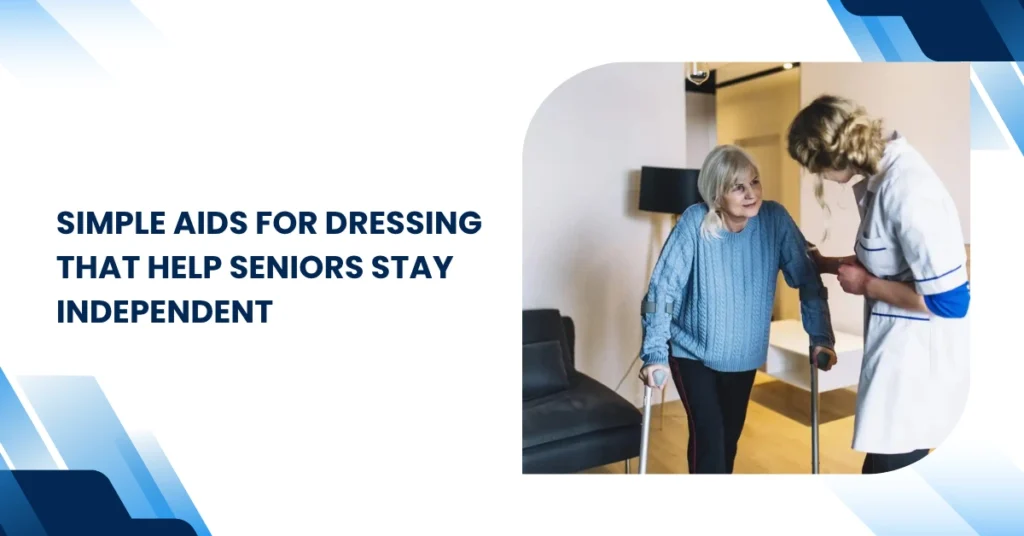
Dressing is an important part of everyday life for seniors. Maintaining independence and dignity can include choosing an outfit, putting a shirt on, pulling up pants and fastening buttons. Dressing can be difficult due to aging, reduced mobility or balance issues, as well as arthritis, weak muscles, and limited hand coordination.
It is fortunate that seniors don’t have to lose their independence just because dressing is difficult. Simple dressing tools for seniors make daily tasks safer and easier. The right tools, a suitable home environment and the assistance needed can help older adults participate more actively in personal care.
Understanding these devices will help families who are looking for Personal Care and home health support in the USA to develop a care plan that is comfortable and focuses on independence.
Elbok Home Health Care understands that each senior has different abilities and preferences. We also recognize that they have different care needs. Our goal is compassionate home support that encourages seniors to be as involved as possible in their daily routines.
What are dressing aids for seniors?
Dressing aids help people to put on, take off, adjust or fasten their clothing. These aids are especially useful for older adults who may have trouble bending, grasping, balancing or using small fasteners.
Examples include:
- Dressing sticks
- Shoehorns with long handles
- Button hooks
- Zipper pulls
- Sock aids
- Elastic shoelaces
- Reacher Tools
- Magnetic clothing fasteners
- Adaptive clothing
- Long-handled sponges and accessories for reaching
- Clothing accessories with easy-grip grip
These devices aim to make dressing easier. Some devices allow seniors to perform a task on their own, while others require less physical assistance from caregivers.
The best dressing tool depends on an individual’s mobility and strength. It also depends on their range of motion.
Dressing can be difficult for older adults
Dressing is a seemingly simple task, but it involves coordination, flexibility and strength. It also requires balance, cognitive attention, and a good deal of mental focus.
Dressing can be difficult for a number of reasons.
Limit Hand Dexterity
Fine motor skills are required to operate buttons, zippers and hooks. These tasks can be frustrating for seniors with stiff or painful fingers.
The use of a buttonhook or a magnetic fastener reduces the need to make precise finger movements.
Reduced Flexibility
It may be necessary to bend forward or reach toward your feet when putting on socks, shoes or pants. These movements can be uncomfortable or dangerous if you have limited flexibility.
Dressing tools with long handles and sock-aids can reduce excessive bending.
Arthritis and joint stiffness
Arthritis can affect any joint, including the joints of the shoulders, hips and knees. Wearing clothing that requires gripping, reaching, or pulling may be painful.
Dressing accessories and adaptive clothing can help make daily routines more comfortable.
Balance Difficulties
The risk of falling over increases when you stand on one leg while putting on shoes or pants.
Seniors may feel safer if they sit in a stable seat and use dressing aids.
Muscle Weakness
When strength is reduced, it can be difficult to reach overhead or pull clothing over the body.
A caregiver can help with the more difficult parts of dressing, while the senior can complete the portions they can safely handle.
When should a senior consider dressing assistance at home?
Some seniors need assistance with dressing, while others may benefit from a dressing aid.
When a senior is concerned about how to dress , consider professional help.
- You cannot dress yourself without assistance
- Loses of balance is a common problem when dressing
- The clothing is difficult to reach
- Have trouble with clothing fastening?
- Becomes exhausted during dressing
- After an injury or surgery, you may need help.
- Needs assistance with daily activities
- You have difficulty maintaining a regular routine of personal care
While professional caregivers provide assistance, they encourage seniors to take part in activities that they are able to safely do.
Ten Simple Aids to Dressing that Help Seniors Stay Independent
Many tools are available to help you dress. Here are a few of the best options for older adults.
Dressing Stick
A dressing stick has a long handle that is designed to assist a person in moving clothing without having to bend or reach repeatedly.
Dressing sticks often have a hook, or a specially shaped end, that helps pull shirts or jackets or pants into place.
What It Does
A dressing stick may help seniors:
- Pulling clothing towards themselves
- Move sleeves into position
- Get your clothes
- Adjust your garments
- Reduce reaching and bending
- Dress for less physical strain
This can be particularly useful for seniors who have limited shoulder or arm movement.
Long-Handled Shoehorn
The elderly may need to bend a lot when putting on their shoes. The senior can guide the heel of the shoe into the shoe using a long-handled tool.
This simple device is especially useful for seniors who find it difficult to reach their feet.
Benefits include:
- More bending
- Easier shoe application
- Reduced strain
- Improved dressing independence
- Comfortable daily routines
Using a shoehorn can make the process of changing shoes easier for many seniors.
Button Hook
Anyone with limited dexterity may find it difficult to operate small buttons. Buttoning a shirt can be difficult for seniors who have stiff fingers or a reduced grip strength.
A button hook is usually a small hook or loop that helps pull a button into its opening.
The tool can be used to help the user fasten the item instead of using their fingers.
Zipper pulls
Zippers require precise finger movements and a firm grip.
The zipper extension gives you a bigger area to grip, which makes it easier to operate.
It may be helpful for seniors experiencing:
- Weak grip
- Finger stiffness
- Reduced coordination
- Arthritis
- Difficulty in grasping small items
An oversized zipper can make a difficult clothing feature much more manageable.
Sock Aid
It can be difficult for older people to put on socks because they often have to bend down toward their feet.
The sock aid allows the senior to slide their foot into the sock before it is placed over the frame or device.
It may be possible to reduce the need for deep bends and reaches.
Seniors with restricted hip or back mobility can benefit from socks that help them.
Elastic Shoelaces
The traditional shoelaces must be tied and untied repeatedly. This task may be difficult for seniors with limited dexterity.
The elastic shoelaces make it easier to slip on footwear.
You can reduce the need for:
- Tie knots
- Bend repeatedly
- Small laces can be manipulated
- Use significant finger strength
Seniors must still wear secure footwear that is appropriate to their level of mobility and risk for falls.
Reacher or Reaching Tools
A reacher has a long handle with a gripping device at the end. It can be used to retrieve clothing from the closet, floor or other hard-to-reach places.
Reachers can help reduce unnecessary bending, stretching and stooping.
A senior could use it to pick up an item that’s fallen on the floor instead of bending over.
Magnetic Clothing Fasteners
Magnet closures are easier to use than buttons.
These can be used to fasten clothing that has been specially designed for the disabled or as an alternative.
These closings are useful for older people who may have trouble:
- Fine Motor Movements
- Buttoning
- Finger strength
- Hand coordination
Seniors who require additional support in dressing can find more comfort with adaptive clothing.
Adaptive Clothing
The adaptive clothing has features that make dressing easier.
These features can vary depending on the garment.
- Side openings
- Magnetic closures
- Velcro fasteners
- Elastic waistbands
- Larger openings
- Simple closures
- Easy-access designs
When conventional clothing causes unnecessary discomfort, adaptive clothing can be a great solution.
It is not intended to take away independence. Adaptive clothing allows seniors to dress more comfortably.
Easy-on Shoes
Shoes that are easy to remove and put on can simplify dressing.
You may choose from a variety of options, depending on your needs. These include shoes with elastic laces or adjustable closures.
It is important to have a good fit and secure support. Seniors should avoid wearing footwear that is unstable or difficult to wear.
Elbok Home Health Care: Take the Next Step
Contact Elbok Home Health Care to discuss the needs of your family and find solutions that will make daily life at home safer and more comfortable.
Dressing aids for Seniors: Promoting independence through dressing
Dressing aids are not just there to make it easier to dress. These tools can help seniors achieve their goal of staying active in daily life.
Encourage Self-Care
Seniors who can dress themselves independently may feel more engaged in their personal care.
A caregiver could help the senior put on pants, but let him choose his shirt and wear his sweater on their own.
Even small achievements can have a big impact.
Supporting Dignity
Personal care is a private matter. Seniors prefer to be in control of their dressing and grooming routines.
Dressing aids allow you to perform tasks on your own or with less physical assistance.
Reduce Frustration
When everyday clothing is difficult to wear, it can be frustrating.
Certain tools can be used to make mornings easier.
Making caregiving assistance more efficient
Dressing aids are also helpful for caregivers.
The caregiver can concentrate on the areas that need assistance when a senior is able to complete certain tasks independently.
This leads to a better collaborative experience in the care setting.
How to choose the right dressing aid for a senior
No one dressing solution is suitable for all.
Consider the abilities and limitations of your senior before choosing a device.
Consider Hand Strength
Consider magnetic closures or adaptive clothing if buttons and zippers become difficult to use due to reduced grip strength.
Consider Mobility
Long-handled tools or sock aids can be helpful if bending is difficult.
Consider Balance
When it is safe and appropriate, seniors who have balance issues should dress themselves while sitting.
Cognitive Abilities
Some tools may require several steps. Select an aid the senior will understand and be able to use.
Take into consideration your personal preferences
Dressing aids should be a natural part of the individual’s daily routine. Seniors will use tools that are comfortable and easy to use.
Safety Tips for Seniors in the Home
When combined with good habits, dressing aids can be very effective.
Sit down when dressing
When possible, and if it is appropriate, seniors with balance issues may find it beneficial to dress while sitting in a stable-style chair.
Keep clothing within easy reach
Organise clothing that is worn frequently at a height that’s convenient.
Store your everyday clothing in places that are easy to reach or climb.
Choose Comfortable Clothing
Dressing easier can be achieved by using soft fabrics, elastic waistbands and larger openings.
Avoid Rushing
When seniors feel pressured, their morning routine can be stressful.
Encourage the person to dress at their own pace and allow them enough time.
Dressing Areas: Keep them Clear
Take out all clutter, loose rugs and cords from the dressing area.
Clothing selection and dressing can be made easier with good lighting.
Use Proper Footwear
Shoes should be comfortable and stable enough for each individual.
Dressing Assistance Vs Doing everything for an Elder
Encouragement of independence is one of the key principles in senior care.
The caregiver does not have to do all the dressing.
The caregiver should determine what the senior is capable of doing independently, what needs supervision and what requires assistance.
As an example:
The senior picks out the outfit. The caregiver arranges the clothes.
The senior can remain active in the group.
Support should be tailored to the individual’s needs and safety.
Elbok Home Health Care supports seniors with daily dressing routines
Elbok Home Health Care understands that maintaining independence is a key part of providing quality home care.
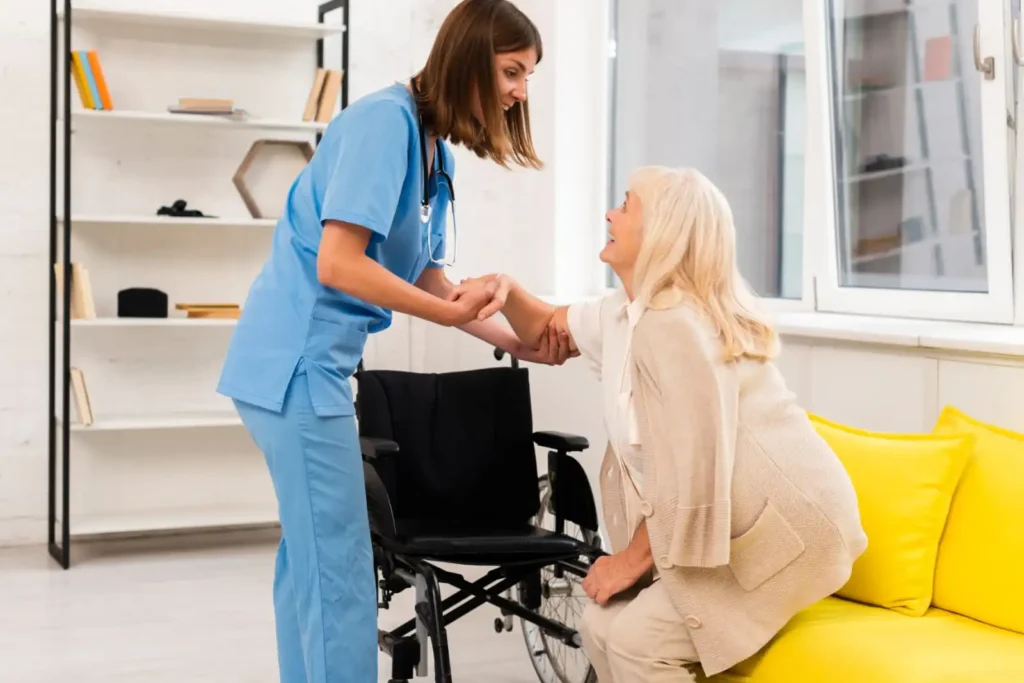
Providing compassionate care, our caregivers will respect your privacy, preferences, routines and dignity while providing daily support.
Support may include the following, depending on your care plan and needs.
- Dressing and undressing assistance
- Selecting appropriate clothing
- Support for personal hygiene
- Help with grooming
- Support for daily mobility
- Help organizing personal-care items
- Encouragement of activities in daily life
- Companionship, supportive supervision and companionship
We help seniors to do as much for themselves as possible, while also providing assistance when needed.
You don’t have to choose between full-time care and complete independence if your loved one struggles with dressing. dressing assistance for seniors combined with compassionate home-based care can make daily routines easier.
Frequently Asked Questions About Dressing Aids For Seniors
Discover answers to common questions about dressing aids for seniors, including sock aids, dressing sticks, button hooks, shoehorns, zipper pulls, and adaptive clothing. Learn how these simple tools can make dressing easier, support daily independence, improve comfort, and reduce the need for physical assistance at home.
1. What is the best dressing for seniors?
What is the best dressing aid for seniors? It depends on their specific needs. A sock assist may help someone who is unable to bend, while a hook for buttons may be better suited to someone with limited dexterity.
2. How can senior citizens put socks on without bending their backs?
The sock aid will help seniors to put on their socks without having to bend towards their feet. A tool with a long handle may make the process even easier.
3. What can seniors do to help them button their clothes?
Button hooks and magnetic closures can help seniors with limited dexterity to fasten their clothes.
4. Can dressing sticks be useful to the elderly?
Yes. Dressing sticks are a great way to help older adults move around and adjust their clothing without having to bend, reach, or stretch.
5. How can older people put on their shoes more easily?
You can make it easier to put on your shoes by using a long-handled, elastic shoelace, or easy-on shoes. Shoes must still fit correctly and be stable.
6. Can caregivers assist seniors in dressing?
Yes. Caregiver assistance with dressing or other daily activities may be provided depending on the individual’s needs and services in the care plan.
7. What are the benefits of dressing aids for independence?
With the help of dressing aids, seniors can complete certain tasks such as getting dressed with less assistance. It can help to promote independence, confidence, privacy and participation in daily activities.
8. What should seniors wear when sitting?
Dressing while seated is safer for seniors with balance issues. The best method to use depends on your abilities and needs.
9. What is adaptive clothing?
Clothing designed for the disabled is often equipped with features that make dressing easier, such as magnetic closures, wider openings or alternative fasteners.
10. When should families consider hiring professional dress assistance?
Families should consider hiring professional help when an elderly person cannot dress safely, has frequent difficulties, is exhausted or requires assistance with several daily activities.